The problem
Distributed business platforms face operational risk when external partner APIs experience latency, network partitions, or outages. Unconstrained retry loops during downstream failures frequently cause worker thread starvation and cascading system instability. Furthermore, concurrent incident investigation by multiple operators risks conflicting mutations and state corruption.
Approach
Canvas Developers outlines an integration recovery console structured around the service request record, coordinating customer, operator, and administrator roles across dedicated views. The architecture enforces explicit timeouts and cluster-wide retry budgets that transition failing requests into a DEGRADED_HOLD state. Optimistic concurrency control and time-bounded leases prevent conflicting edits, while AI-scaffolded UI components remain partitioned from the core transactional engine.
Outcome
Automated test suites verify that downstream dependency outages produce a visible degraded state without corrupting completed work or allowing duplicate mutations.
Distributed business platforms face operational risk when external partner APIs experience latency, network partitions, or outages. Deploying a dedicated Cursor & Claude Code Consulting integration recovery console gives engineering teams diagnostic visibility and safe remediation controls without risking transaction integrity. By coordinating service request lifecycles across customers, operators, and administrators, the recovery console ensures that state transitions remain deterministic and auditable.
While AI coding tools accelerate interface scaffolding, protecting enterprise data requires strict separation between generated UI layers and core state persistence engines. Through structured concurrency controls and bounded retry budgets, teams recover failed integrations while safeguarding data consistency.
How Does an Integration Recovery Console Coordinate Customers, Operators, and Admins?
An effective Cursor & Claude Code Consulting integration recovery console aligns three operational roles around a single source of truth: the service request record. During third-party API outages, customer support representatives, operations engineers, and system administrators require dedicated interface views and distinct operational boundaries to manage degraded workloads safely without exposing internal infrastructure vulnerabilities.
Structuring Service Request Lifecycles Across Three Operational Roles
To eliminate ambiguity when external dependencies fail, every service request transitions through an explicit state machine: RECEIVED, PROCESSING, DEGRADED_HOLD, RETRY_QUEUED, and COMPLETED. Customers receive transparent, plain-language status updates without exposed technical stack traces. When an external partner drops requests or experiences severe latency, the system transitions the record into DEGRADED_HOLD according to defined transition policies, assuring users that their request is safely buffered and scheduled for remediation. Service operators inspect comprehensive diagnostic payloads, HTTP error codes, and latency distributions to isolate root failure causes. Organization administrators govern role-based access controls, security policies, and cluster execution thresholds, ensuring that only authorized personnel trigger manual replays or adjust global pipeline parameters.
Designing Interface Workflows for Health Views, Failed-Job Details, and Controlled Retries
Disciplined integration recovery console development structures operational remediation across three coordinated interface views:
- Health View: Displays live pipeline throughput, partner error rates, and queue backlog depth to detect third-party degradation before processing queues saturate.
- Failed-Job Detail: Presents the exact service request payload, sanitized stack traces, and partner response headers required to diagnose failures accurately.
- Controlled Retry Action: Enables operators to trigger guarded replays using deterministic idempotency keys, preventing duplicate processing or unintended financial mutations.
This coordinated layout provides operators with immediate diagnostic visibility, allowing engineering teams to resolve pipeline blockages rapidly without resorting to manual database overrides or ad-hoc terminal scripts.
What Happens During Downstream Outages: Timeouts, Retry Budgets, and State Safety?
When external dependencies experience outages, unconstrained retry loops frequently trigger cascading failures. A resilient architecture couples rigorous timeout enforcement with bounded retry budgets to ensure downstream degradation never threatens upstream platform stability.
Tracing Dependency Outages Through Explicit Timeouts and Retry Budgets
In a well-architected Cursor & Claude Code Consulting integration pipeline, every outgoing dispatch operates under strict socket connection and response deadlines. Rather than relying on default client settings, our approach configures explicit socket timeouts based on downstream service characteristics to prevent worker thread starvation. When a partner API returns transient HTTP 503 or 429 status codes, the dispatch engine evaluates a configurable cluster-wide retry budget rather than issuing unconstrained automated attempts. A retry budget establishes a predetermined ceiling on retry attempts across the entire cluster, mitigating thundering-herd spikes against struggling external systems. Once consecutive retry attempts exceed an organization's configured failure threshold or the allocated budget is exhausted, automated attempts pause immediately, shifting the service request into DEGRADED_HOLD for structured operator assessment.
Eliminating Concurrent Edits and Resolving Request Ownership Conflicts
In high-pressure incident recovery scenarios, multiple engineers often inspect the same operational dashboard simultaneously. High-reliability integration recovery console development eliminates race conditions by implementing optimistic concurrency control and explicit operator leasing. Each service request record maintains a monotonic version sequence (version_id). When an operator claims a failed job to inspect payloads or test remediation steps, the system assigns a time-bounded operator lease backed by automated heartbeat renewals. If a concurrent user attempts to submit a replay or alter request parameters, the database detects the version mismatch and rejects the conflicting mutation. This mechanism guarantees that every state transition reflects single-owner intentionality, leaving a clean, conflict-free audit trail.
Which Architecture Isolates AI-Scaffolded Components from Critical State Engines?
Rapid application delivery often pairs AI-driven scaffolding with enterprise web frameworks to construct administrative consoles quickly. However, achieving architectural durability requires an uncompromising boundary between AI-generated interface code and deterministic backend state engines.
Partitioning Core State Transitions from Cursor and Claude Code Generated Code
In disciplined Cursor & Claude Code Consulting development, teams partition presentation and reporting logic from the core transactional engine. AI coding agents excel at scaffolding React dashboard components, Tailwind layout grids, TypeScript interfaces, and API client wrappers. Yet, critical operations—such as monotonic state transitions, distributed lock acquisition, idempotency enforcement, and financial audit logging—must reside in a strictly typed, human-architected core service. By enforcing clear domain boundaries via clean architecture, the recovery console consumes immutable domain events rather than mutating database tables directly. If an AI-assisted UI refactoring introduces a rendering regression, backend domain boundaries reject invalid state transitions, ensuring that transactional integrity remains mathematically intact.
Validating Tool Capabilities via Primary Documentation and Separating Out-of-Scope Logic
Effective engineering governance requires verifying tool boundaries against primary vendor documentation. As detailed in the official Claude Code documentation, the agentic loop operates through context gathering, tool execution across files and shell environments, and verification, maintaining local file snapshots so developers can safely revert changes. In modern Cursor & Claude Code Consulting vibe coding workflows, teams use these capabilities to accelerate CLI automation, component generation, and test scaffolding. Out-of-scope operational responsibilities—such as production database connection pooling, distributed consensus, and transaction isolation—remain strictly decoupled within dedicated backend engines. Consulting engagements structured through Canvas Developers Cursor & Claude Code Consulting establish these architectural guardrails before code generation begins, avoiding architectural debt.
How Do Acceptance Tests Verify Resilient Recovery Without Corrupting Completed Work?
Verifying system resilience requires rigorous acceptance testing that proves recovery workflows function under simulated operational stress without corrupting persistent records or duplicating business mutations.
Validating Visible Degraded States Under Simulated Downstream Outages
In a verified Cursor & Claude Code Consulting integration test harness, engineers validate system behavior by injecting simulated network partitions, downstream HTTP 500 responses, and socket dropouts against concrete acceptance criteria:
- Configurable Timeout Boundaries: Outgoing partner calls enforce predetermined socket deadlines before tripping circuit-breaker logic to isolate sluggish dependencies.
- Visible Degraded State Verification: Active requests transition deterministically to
DEGRADED_HOLDupon reaching the configured consecutive failure threshold, alerting operators immediately across monitoring surfaces. - Zero-Corruption Invariants: Completed transactions retain immutable settlement states and cryptographic hashes, with zero duplicate mutations or partial writes permitted across test cycles.
Automated test suites verify that active requests halt cleanly when downstream links fail, ensuring frontend consoles mirror backend state accurately without risking data corruption.
Evaluating Tradeoffs Between Immediate Automated Retries and Supervised Operator Intervention
A primary architectural tradeoff in integration recovery console development balances automated retries against supervised operator intervention. Automated retries with exponential backoff resolve transient flickers without human toil. However, sustained partner outages risk exhausting rate limits and causing database lock contention. Supervised operator queues introduce response latency but guarantee contextual review, payload sanitization, and controlled replay timing. A resilient architecture caps automated retries within a configurable cluster budget before escalating stalled jobs to human operators. For low-volume workflows with relaxed recovery objectives, a dead-letter queue with alerts offers a simpler alternative without interactive console overhead.
How Does Canvas Developers Implement Governed AI Engineering for Recovery Consoles?
Building mission-critical administrative infrastructure demands speed without sacrificing operational reliability. Canvas Developers combines modern AI-accelerated workflows with rigorous human engineering governance to deliver robust recovery systems.
Balancing Accelerated AI Scaffolding with Human Architectural Oversight and Code Review
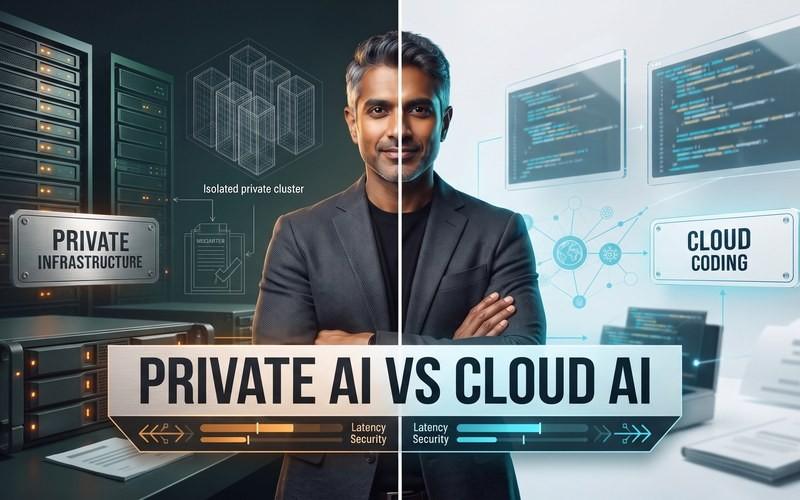
In our engineering practice, adopting Cursor & Claude Code Consulting vibe coding workflows accelerates the initial scaffolding of dashboards, interface components, and API boilerplate. By using AI coding agents to generate repetitive UI layouts and schema types, engineering teams shorten feedback loops and reduce boilerplate coding time. However, automated agents cannot replace senior engineering judgment in distributed systems. Human engineers must design transactional boundaries, review every pull request, and verify idempotency mechanisms, cryptographic signatures, and concurrency locks. Canvas Developers offers two governed AI delivery packages: ‘Private / Local AI Engineering’ within client-controlled infrastructure, and ‘Claude Code / OpenAI Codex Engineering’ using vetted commercial cloud platforms. In both models, experienced engineers own architecture and release decisions.
Structuring Scoped Assessments, Milestone Delivery, and Production Handover
Delivering an enterprise-ready Cursor & Claude Code Consulting integration recovery console follows a disciplined lifecycle. We begin with a scoped technical assessment that evaluates your existing API stack, dependency failure modes, and concurrency requirements. Development proceeds across agreed milestones—covering core data modeling, state machine isolation, interface assembly, and chaos resilience testing. Every milestone undergoes automated acceptance testing and code review before production handover. If your team is seeking to modernize operational tooling or harden AI-built prototypes, submit your current stack and recovery requirements through our contact form to start a scoped technical review.