AI Features & Agents
MCP Server Development
Secure Model Context Protocol integrations connecting Claude Code, Cursor, and enterprise agents to your private APIs, databases, and operational tools with strict controls.
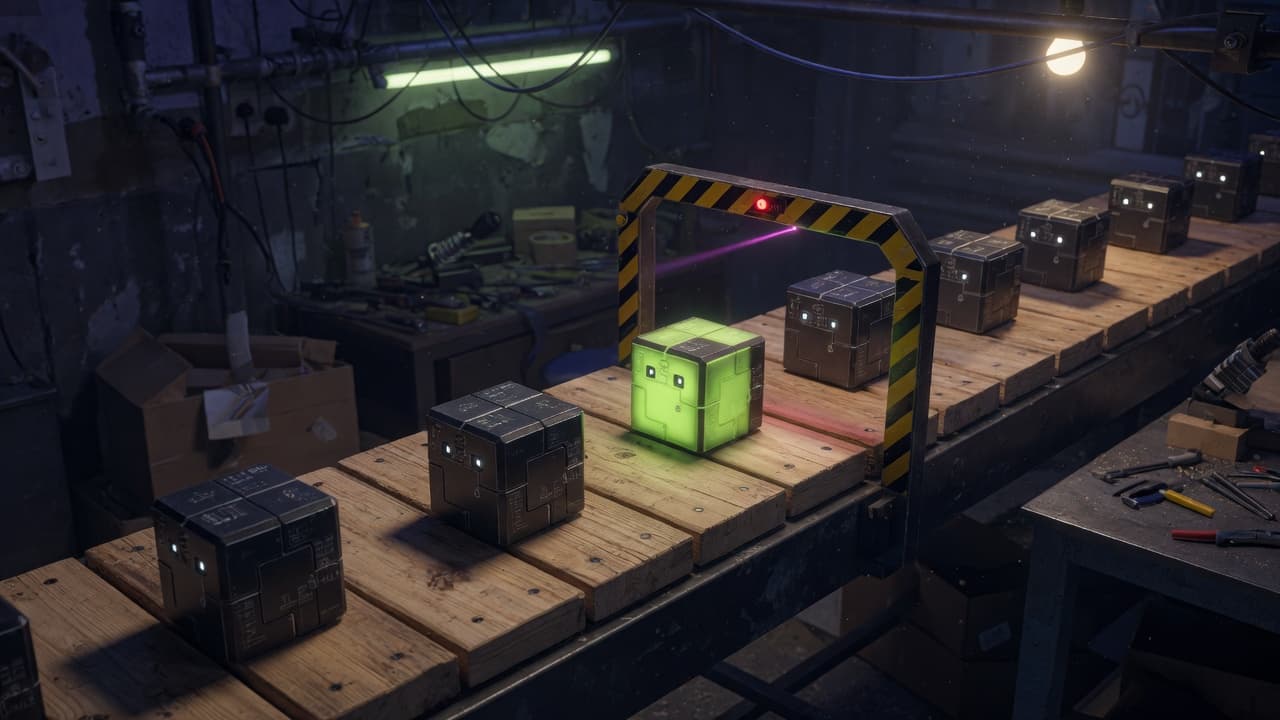
Connect enterprise intelligence to operational data
Through targeted mcp server development, we connect AI developer tools and enterprise agents directly to your proprietary databases, internal microservices, and operational workflows. As an experienced model context protocol developer team, we build custom mcp servers and build mcp server for Claude Code, Cursor, and enterprise LLM platforms. Our work establishes reliable tool definitions, structured prompts, and context streaming without exposing sensitive infrastructure. AI coding agents accelerate protocol scaffolding, boilerplate generation, and schema validation, but experienced engineers direct the work, own the architecture, and review every change. Whether you require an mcp tool integration agency to expose internal databases safely or automate multi-system workflows, we deliver secure, tested, and maintainable MCP solutions.
AI-assisted, expert-led MCP engineering
How AI assists
- Scaffolding JSON-RPC transport handlers, schema definitions, and repetitive MCP tool registrations
- Drafting typed wrappers for internal REST and GraphQL endpoints to map them into MCP resources
- Generating test mocks and synthetic prompt sequences to verify tool invocation signatures
- Drafting container manifests, environment configurations, and documentation for client setup
What our experts own
- Engineers architect authentication, fine-grained access control, and sanitization boundaries to prevent prompt injection
- Specialists review database queries and rate limits to protect internal systems from runaway autonomous agent loops
- QA validates permission boundaries, tool execution timeouts, and fail-safe error handling across real LLM clients
- DevOps configures secure isolated hosting, credential vaults, audit logging, and approved release pipelines
Where each part of your MCP architecture runs
Illustrative split for an enterprise MCP deployment; the real configuration reflects your infrastructure and security policies.
In the LLM client & developer environment
- Client configuration connecting Claude Desktop, Claude Code, or Cursor
- Local transport over standard I/O (stdio) or Server-Sent Events (SSE)
- Prompt context formatting and tool invocation requests initiated by the model
- No master database credentials or unrestricted production keys stored here
On the MCP server host
- JSON-RPC protocol handler processing requests and streaming responses
- Input sanitization, tool schema verification, and parameter type checking
- Authentication tokens and role-based access validation for each tool call
- Connection adapters executing queries against databases and microservices
- Audit logging and execution metrics captured before returning outputs
Your internal systems & cloud providers
- Proprietary databases, data warehouses, and vector indices reached via secure networks
- Internal microservices, ERP, and CRM platforms accessed through authenticated APIs
- Secret management vaults storing connection strings and private credentials
- Infrastructure monitoring and alert systems running in your existing cloud environment
Who brings us MCP projects
Your engineering or operations teams want AI assistants and developer agents to interact with proprietary APIs and databases, but existing plugins lack security, schema stability, or required enterprise integrations.
- Engineering leaders enabling Claude Code or Cursor across their teams with access to private repositories and internal services
- Product teams building autonomous AI agents that require standardized tool access to customer databases and ERP software
- Founders and CTOs looking to safely connect customer-facing or internal LLMs to proprietary microservices without data leaks
What you receive
What we deliver for your MCP integration
Custom MCP server architecture
Tailored Model Context Protocol servers implemented in TypeScript or Python, exposing internal systems via standard resources, tools, and prompts.
Claude Code & Cursor connectivity
Tested configurations allowing developer environments, Claude Desktop, and IDE agents to discover and invoke internal tools seamlessly.
Database & API bridges
Read and write adapters for PostgreSQL, MySQL, vector stores, and private microservices with parameter typing and SQL injection safeguards.
Granular permissions & security
Role-based execution scopes, credential isolation, and audit logging to ensure agents only run permitted operations on approved data.
Automated test suites & validation
Comprehensive integration tests validating JSON-RPC payloads, schema adherence, error responses, and tool call accuracy under edge conditions.
Deployment & client documentation
Production containerization, environment setup scripts, and clear connection guides for your team's LLM clients and enterprise hosts.
Scope, preparation and support
Start with a defined scope
Scope an MCP server around specific tools, resources, and clients. Connecting developer IDEs, internal databases, or enterprise platforms fits here; broader app builds have their own dedicated service pages.
What you provide
Bring API specifications, database schemas, access policies, and target LLM client requirements. We clarify protocol boundaries, authentication models, and data sensitivity during scoping before engineering begins.
Support after delivery
Receive full source code, test suites, container definitions, and deployment guides. Handover includes setup documentation, with ongoing maintenance and protocol updates available under an agreed support plan.
Not part of an MCP server project
- Building full web applications or consumer portals from scratch belongs to Web Design & Development or SaaS & MVP Development.
- Training or fine-tuning foundation LLM weights from raw datasets is a distinct machine learning scope outside of standard MCP engineering.
- Refactoring an entire legacy core application before exposing its APIs starts with Application Modernization & Stabilization.
- Standalone mobile application development for iOS or Android is handled under Mobile App Development.
Typical MCP integration requests
Typical scenarios we scope, not client case studies.
Database context server for engineering teams
A tech company wanted Claude Code and Cursor to query internal schema documentation and run safe read-only analytics queries on PostgreSQL. We built a typed MCP server with connection pooling, query safety guards, and column-level masking so engineers could troubleshoot faster without exposing customer PII.
Internal DevOps & CI/CD workflow bridge
An engineering department needed their developer agents to trigger deployment pipelines, check build logs, and query monitoring alerts through chat. We developed a custom MCP server connecting to GitHub Actions and internal observability APIs with strict user permission verification.
Proprietary CRM and ticket integration for agents
An enterprise operations team needed AI customer support agents to look up ticket history, update account statuses, and trigger billing webhooks. We delivered an MCP server exposing documented tools with input validation and audit logging across every executed action.
How an MCP server project runs
- 01
Discovery and system audit
We analyze the internal APIs, databases, and LLM clients you want to connect, define access boundaries, and select your preferred AI delivery package.
- 02
Interface design and scoping
Engineers design the MCP tool schema, prompt templates, and security rules, agreeing on exact read/write permissions before coding starts.
- 03
Build, review and test
AI coding tools accelerate implementation while engineers review every pull request, and QA tests agent tool calling against live integration testbeds.
- 04
Deployment and handover
We deploy the server to your staging or production environments, verify client connections, and hand over source code, configuration, and documentation.
Two ways to work with AI tools
Choose where AI coding agents may process your code while we build. The engineering standard is the same either way.
- Private / Local AI Engineering
Privately hosted models inside infrastructure you control or an agreed isolated environment.
Discuss with this package - Claude Code / OpenAI Codex Engineering
Claude Code and/or OpenAI Codex with cloud settings your organization approves.
Discuss with this package
Not sure? We'll recommend one during scoping. Compare AI delivery options
How architecture, QA and operations connect
Engineered tool boundaries
Senior engineers define clear parameters, validation schemas, and rate limits. AI tools draft the boilerplate; humans verify that agents cannot execute destructive or unauthorized actions.
Rigorous protocol QA
QA verifies tool execution, schema compliance, and timeout handling against real models. We simulate hallucinations and malicious agent prompts to ensure graceful failure.
Controlled enterprise deployment
Every MCP server is containerized and deployed through automated CI/CD pipelines to your infrastructure or cloud of choice, complete with observability and health endpoints.
Ongoing protocol maintenance
As the Model Context Protocol specification evolves and LLM clients update their tool-calling behavior, we provide version updates and operational monitoring under agreed support terms.
FAQ
Frequently asked questions
How much does custom MCP server development cost?
It depends on the number of tools, database connections, security controls, and authentication protocols required. After scoping your systems and requirements, we provide an agreed proposal with milestones and transparent pricing. You invest in an engineered, tested integration and architectural accountability, not unverified developer hours or AI tool subscriptions.
Can you build MCP servers for Claude Code, Cursor, and custom LLM agents?
Yes. As a model context protocol developer team, we build custom mcp servers compatible with Claude Desktop, Claude Code, Cursor, and bespoke enterprise LLM agents. We implement official Model Context Protocol specifications over stdio or SSE transport, ensuring your agents get structured tool definitions and context reliably.
How do you protect private databases and internal APIs from unintended agent actions?
Our engineers enforce strict access boundaries: granular role-based permissions, read-only database connections where writes are unnecessary, input validation, and rate limits to block runaway loops. AI tools help scaffold code, but human engineers inspect all security logic and query handlers before release.
Where is our code and data processed when AI coding tools are used?
It depends on your development package. With Private / Local AI Engineering, models run on your infrastructure or an agreed isolated environment with zero external data sharing. With Claude Code / OpenAI Codex Engineering, commercial tools process code under approved enterprise settings. In both cases, human engineers direct the work and review every change.
Related case studies

Related projects
Related articles


Related Services

Vibe Coding Consulting & Governance
Architectural guardrails, automated testing enforcement, and code audits for AI-generated codebases....
Learn more
AI Chatbots
Chatbots for your website, WhatsApp and other channels that answer from your own content, hand off t...
Learn more
LLM Integration
Add large language models to your product with retrieval over your own data, evaluation on real ques...
Learn more
Machine Learning Models
Custom machine learning models that turn your data into forecasts, scores and recommendations, valid...
Learn more
Ready to build custom MCP servers for your enterprise?
Tell us which internal systems and LLM clients you need to connect. We will recommend an architecture and AI package, then provide a scoped assessment through our contact form at https://www.canvasdevelopers.com/contact.