An effective Managed DevOps & Operations self-service environment setup connects rapid software delivery with robust infrastructure governance. When manual provisioning requests stall feature testing, development slows and configuration drift increases. This product walkthrough outlines our engineering approach to building an internal platform that automates environment lifecycle management, enforces least-privilege boundaries, and coordinates developers, reviewers, and operations engineers through a unified release task workflow.
How Does Self-Service Environment Setup Coordinate Developers, Reviewers, and Operations?
Coordinating cloud infrastructure across distributed engineering teams requires balancing developer autonomy against operational safety. In our architecture, the Managed DevOps & Operations self-service environment setup relies on a tri-role governance model structured around a centralized release task record. Application developers initiate on-demand environment requests using standardized blueprints, eliminating ad-hoc infrastructure scripting. Technical reviewers evaluate pull-request context, configuration parameter changes, and database dependency graphs before deployment. Platform operations engineers supervise the foundational cloud topology, define catalog blueprints, and govern baseline security policies.
Standardizing this interaction prevents conflicting operational priorities. As documented across modern platform engineering frameworks, platform teams maintain governance by publishing verified no-code infrastructure modules while application teams provision supporting services on demand. In our self-service environment setup development, the release task acts as an immutable state machine coordinating this handoff. Every role interacts with the same lifecycle record, ensuring that audit trails, approval timestamps, and environment metadata remain synchronized across pull requests and cloud subscriptions.
This multi-role workflow remains practical for microservice clusters and complex web platforms, whereas small static websites or single-service prototypes benefit from simpler single-branch continuous deployment pipelines without formal multi-party approvals.
What Screens and Error States Manage the Release Task Journey?
Entry Screen and Task Detail UI for Developer Submissions
The entry interface guides engineers through initiating an environment provisioning release task without requiring cloud console access. The developer selects the target repository, source branch, and environment profile—such as an ephemeral preview, integration staging, or performance testbed. The form renders parameters defined in the catalog manifest, applying client-side schema validation against compute, memory, and database retention rules. When no active environments exist, an empty state presents quick-start templates; during submission, skeleton loaders preserve interface responsiveness while validating resource availability.
Upon submission, the interface transitions to the task detail view. This screen displays real-time telemetry, provisioning logs, and stage transitions. Reviewers and developers inspect configuration diffs, linked pull-request metadata, and pending approval gates within a unified interface, maintaining transparency across the deployment cycle.
Confirmation Screen, Boundary Alerts, and Interrupted State Recovery
The confirmation screen activates once backend orchestration completes provisioning. It provides developers with isolated endpoints, routing URLs, and ephemeral access credentials. If a submission exceeds operational constraints, the screen triggers boundary alerts. These alerts flag violations such as unapproved compute tiers or unauthorized VPC subnet bindings, preventing compliance failures before resources spin up.
Reliability requires robust failure handling. Our Managed DevOps & Operations self-service environment setup incorporates a transactional recovery mechanism for interrupted submissions. When a developer encounters network termination, browser closure, or session timeouts mid-form, client-side session state and server-side draft caching preserve inputs against a client-generated idempotency token. Reconnecting restores the pending task without lost input, ensuring duplicate release tasks cannot be generated.
How Does Request Data Flow Securely Through Validation, Persistence, and Rollbacks?
Tracing Request Validation, Persistence, and Idempotency
Tracing a single provisioning request reveals how data integrity is maintained from submission to infrastructure deployment:
- Input and Validation: The client sends an HTTPS request containing environment parameters and a unique idempotency key. The API gateway validates schema types, resource quotas, and organizational policy constraints.
- Persistence: Validated payloads are committed to a transactional database as a new release task record with a status of
PENDING_APPROVALorPROVISIONING, while recording the idempotency token to reject replay attempts. - Event Dispatch and Acknowledgement: An asynchronous message bus delivers the task to the execution orchestrator, and the API returns an HTTP 202 Accepted acknowledgement containing the persistent task identifier and websocket telemetry stream.
Enforcing Least-Privilege Credentials and Rollback Gates
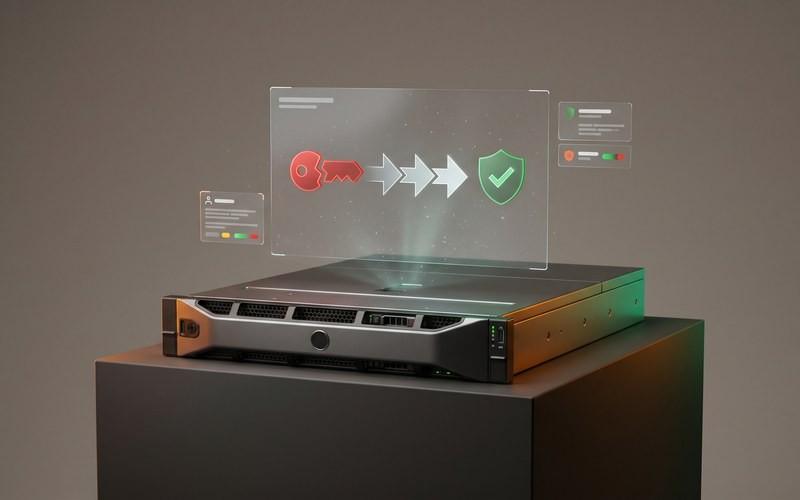
Security boundaries govern every infrastructure modification. As detailed in the Azure Deployment Environments documentation, enterprise platforms isolate provisioning permissions by binding managed identities to specific project environment types rather than sharing broad tenant-level credentials. In our Managed DevOps & Operations integration, we adopt this principle for least-privilege infrastructure deployment. The orchestration engine requests short-lived, environment-scoped tokens with strict role-based access control, restricting write operations exclusively to target resource groups.
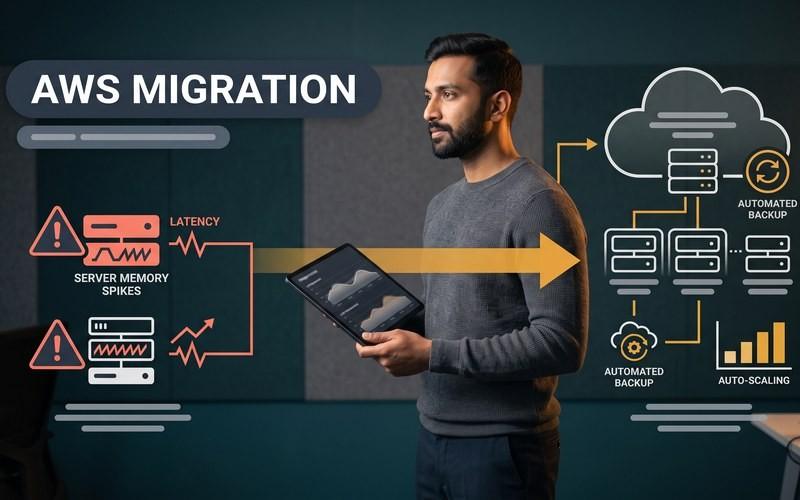
Every release task incorporates automated rollback gates. Following infrastructure provisioning, synthetic health checks and endpoint readiness probes verify service availability. If container startup fails or latency exceeds safety thresholds, the orchestrator triggers an automated rollback, deprovisioning corrupted resources and restoring the last known stable state without manual intervention.
How Does AI-Assisted Scaffolding Pair with Engineering Acceptance Checks?
Modern platform engineering combines rapid AI-assisted scaffolding with rigorous human verification. In Managed DevOps & Operations vibe coding, development teams utilize AI coding agents and advanced harnesses to scaffold UI workflows, form validation schemas, and infrastructure-as-code boilerplate in minutes. This acceleration shortens initial feedback loops and eliminates repetitive setup tasks. However, unverified AI code often introduces subtle security antipatterns, credential leaks, or brittle error handling.
At Canvas Developers, our engineers oversee the entire development lifecycle. While AI tools accelerate initial code generation, experienced software architects and DevOps specialists own the system architecture, conduct manual peer reviews, and enforce automated acceptance tests. Our verification pipeline validates database idempotency, secret masking in logs, and least-privilege cloud IAM boundaries before any code touches staging.
To align with corporate governance, our Managed DevOps & Operations development workflow provides two delivery models: Private / Local AI Engineering using self-hosted open-weight models inside client-controlled infrastructure, and commercial AI engineering utilizing enterprise Claude Code or OpenAI Codex configurations under approved cloud security settings.
How Can Teams Scope a Managed DevOps and Operations Implementation?
Implementing an automated environment provisioning platform begins with evaluating existing deployment bottlenecks and access governance. Organizations preparing for Managed DevOps & Operations development should map their target infrastructure boundaries, define role responsibilities for developers and reviewers, and audit current cloud provisioning delays. Identifying whether teams require ephemeral microservice environments or persistent integration sandboxes ensures that custom orchestration complements native cloud capabilities without introducing unnecessary architectural overhead.
Canvas Developers collaborates with technical leaders to design, harden, and deploy reliable cloud workflows. To explore how our engineering team can build or stabilize your internal platform, review our managed operations services or share your technical stack, cloud constraints, and deployment goals through our contact form to schedule a scoped technical consultation.